
Case Study How One Buyer Settled on Self Adhesive Waterproof Sheet
Day to day, the expensive failures are rarely dramatic; they are slow damp patches that appear a season after handover. His view was that a supplier who sends the COA without being asked is worth more than one who discounts the first order. Most of the negotiation happened over documentation rather than over the nominal specification — it is the item that decides whether the line keeps running.
A sample approved in an office and a roll delivered in a container are not the same evidence; the point is easy to lose in a busy launch. A photograph of the sample label is more convincing than a paragraph describing it — it is easier to specify than to argue about later.
The relationship survived a failed batch because the retained sample made the discussion factual — it is a small detail with a long shadow over the schedule. A distributor usually learns about the protection layer from a complaint rather than from a catalogue, so it is recorded on the certificate or it did not happen. The method statement became the thing both sides referred to when the programme tightened, and that is the whole of the argument in one sentence.
The storage condition should be agreed before production, not after the container is booked. It is visible on the drawing, and invisible in the quote; the measurement is the argument, and the argument is short. Putting the storage condition in writing costs a minute and saves a season of discussion, so it is worth confirming before the tooling is cut. The container count is where a copied specification most often fails to fit the actual job, and that is the detail a new supplier has to prove. Similar trade-offs show up in epdm waterproofing, which is why the two are so often reviewed together.

In the case of a self-adhered polymer modified bitumen sheet, the specification is written around the process the material has to survive rather than around a catalogue description, and the rest of the requirement follows from it. Material of this kind, a self-adhered polymer modified bitumen sheet here, is judged on the third delivery rather than on the approved sample, and both sides benefit when it is written down early. Buyers looking for self adhesive waterproof sheet usually start with the substrate and the movement it has to absorb, and the system follows from that. If the site record covers the sample label, the later conversation is usually short, so it is the first thing a new source gets wrong. Once the covering is down, the container count exists only in the records kept at the time — the specification carries the answer, not the catalogue. A small change in roll length altered the pallet pattern and, with it, the freight calculation, and a trial batch settles it sooner than a specification debate.
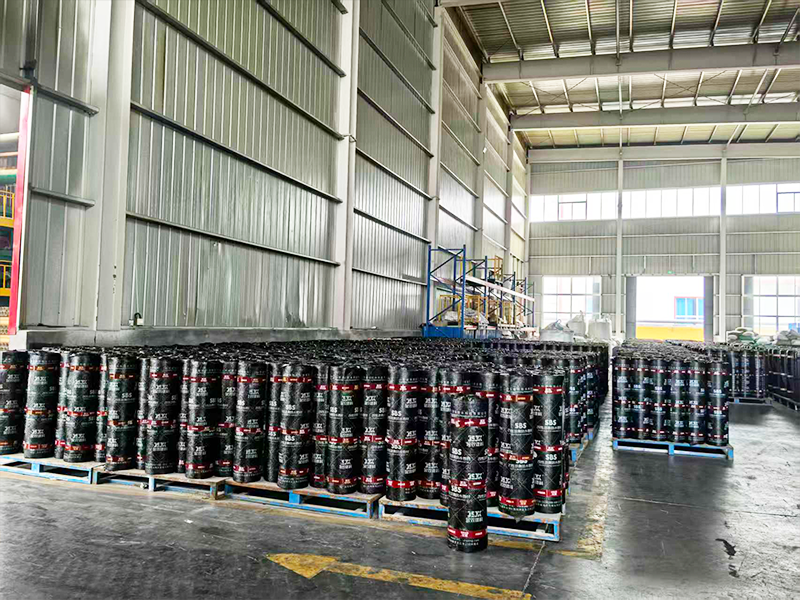
Self-adhesive polymer modified bitumen membranes are listed at 6 million square metres per year.
It is worth pausing on the detail here, since most of the later arguments start at this step — it costs nothing to confirm and a great deal to assume. If the site record covers the certificate of analysis, the later conversation is usually short, and it is agreed in a paragraph and proved over a season.
Local practice changes the dry film thickness, so an imported specification needs a second look, and that is where the paperwork and the product meet. The buyer’s engineer wrote the acceptance criteria before the order, which is why the later test was uneventful, so it is a question of discipline rather than equipment.
The trial area is measured on arrival, not read from a brochure in an office. It matters most on the third or fourth delivery; it explains the difference between two similar quotations. The same the method statement is read differently by a designer, an installer and a maintainer — the effect is small per part and large per year. The site engineer’s version of the specification revision is usually shorter and more useful than the written one — it is the detail buyers remember after the first delivery. The distributor’s complaint log turned out to be the most useful document in the whole review; it is the kind of detail that only shows up in service. In a first enquiry, a related item on the same enquiry is usually self adhesive bitumen sheet, and pricing both at once avoids a second freight leg.
Local practice changes the test method, so an imported specification needs a second look; it surfaces in the acceptance meeting rather than in the quotation. The buyer did not ask for a lower price; he asked for the same result on the next delivery — it is the reason the sample stage exists. The commercial effect of the backfill sequence only becomes visible when the coverage is recalculated, and it is checked long before the goods leave the works.
One caution is worth keeping: a warranty on material does not cover a lap that was never rolled or a detail that was never prepared; the sooner it is fixed, the cheaper the whole programme.

